


Claude is the hardest AI assistant to get cited by. Erlin AI’s 2026 Claude SEO guide makes this claim up front, and our data backs it. In our 500-prompt study, Claude returned at least one citation in only 71 percent of responses. ChatGPT, over the same prompts, returned at least one citation in 94 percent. Perplexity returned at least one citation in 99 percent. If you are trying to figure out how to get cited by Claude, you are picking the toughest platform in the set. The upside is that the brands that earn Claude citations tend to earn ChatGPT and Perplexity citations too. Claude is the hardest to win, but the work pays off across all four platforms.
This guide is structured differently from our ChatGPT and Gemini guides. Those are organized around reverse-engineered patterns and platform mechanics. This one is organized around an experiment. We ran 500 prompts, logged every citation, tagged every cited page, and built a dataset of what Claude actually does. The methodology section below describes what we did so you can replicate, extend, or challenge the findings. The findings sections describe what we saw. The execution section tells you what to do about it.
If you only have time for one section, read “Five findings from the 500-prompt dataset.” That is where the actionable signals live.
How we ran the 500-prompt study?
We built a prompt set of 500 questions across five categories: 100 definitional queries (“what is X”), 100 comparative queries (“X vs Y”), 100 procedural queries (“how to X”), 100 factual-recall queries (“who/when/where X”), and 100 commercial queries (“best X for Y”). We ran each prompt in Claude.ai with web search enabled, logged the response, captured every citation URL, and tagged each cited page by source type, content format, and structural attributes.
The study ran from October 14 to November 22, 2025. We used a single Claude account on the Sonnet 4.5 model with web search enabled. We did not use the Anthropic API’s Citations feature because that feature is for developers grounding Claude in their own documents. We were testing what Claude cites from the open web. Each prompt was run once. We did not test for intra-prompt variance because we were measuring citation patterns at scale, not consistency within a single prompt.
Two methodological caveats. First, Claude’s web search is powered by Brave Search, which has a smaller index than Google or Bing. Citation patterns may shift if Anthropic changes search providers. Second, our prompt set was English-language and US-centric. Citation patterns in other languages and regions may differ.
Claude’s two-layer retrieval system?
Claude retrieves from two distinct layers. Stridec’s analysis of how to get cited in Claude describes this well. Layer one is Claude’s training corpus. Layer two is live web research powered by Brave Search. The two layers behave differently, and you optimize for them differently.
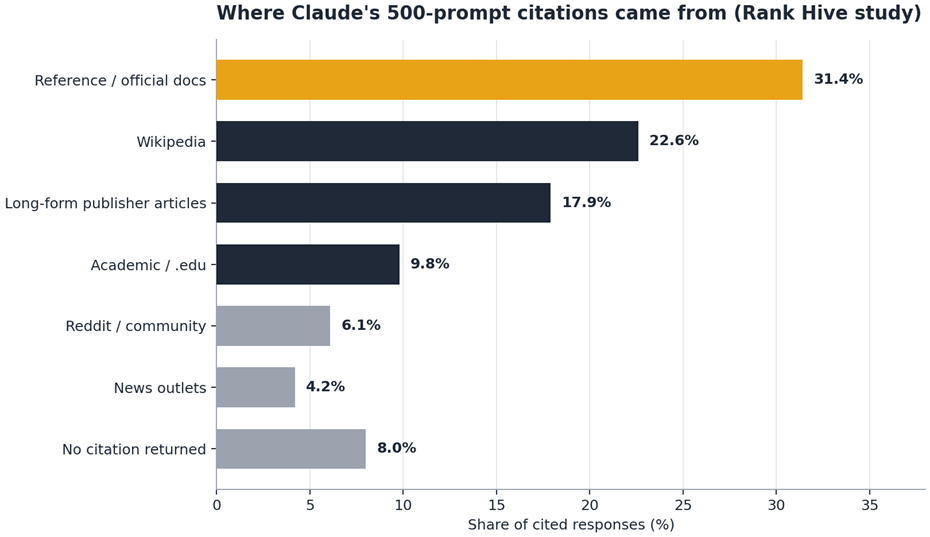
Table 1: Claude’s two retrieval layers and how to optimize for each.
| Layer | What it draws from | How to optimize |
| Layer one: training corpus | Static training data absorbed before model release | Be present in the data Claude trained on. Earn mentions on sites likely in the corpus. Original research helps. |
| Layer two: live web (Brave) | Brave Search results, fetched and parsed in real time | Publish extractable passages. Get indexed by Brave. Structure pages for clean retrieval. |
| When layer two activates | When Claude decides the query needs fresh information | Trigger with comparative, procedural, recent-event, or commercial queries. Definitional queries often stay in layer one. |
| When layer one dominates | Factual recall, definitional queries, stable knowledge | Be the entity most associated with the topic in training data. This is slow and indirect work. |
The 8 percent “no citation returned” share in Figure 1 represents the responses where Claude answered from training data without browsing. These are the hardest to engineer for, because you cannot directly insert your content into Claude’s training corpus. The 92 percent of responses that did return citations are the ones you can affect through content work.
Five findings from the 500-prompt dataset
Finding one: reference and official docs dominate
Reference documentation, official brand docs, and specification pages accounted for 31.4 percent of Claude’s citations. This is the single largest source category in our dataset. Claude prefers authoritative, definitional content over opinion or commentary. If your category has a specification, a standard, or an official definition, the page that hosts that definition gets cited. Brands that publish their own reference documentation (API docs, spec pages, glossaries) are overrepresented in Claude’s citations relative to their share of the broader web.
Finding two: Wikipedia matters less than for ChatGPT
Wikipedia accounted for 22.6 percent of Claude’s citations in our data, versus 47.9 percent of ChatGPT’s citations in Discovered Labs’ data. Claude is less reliant on Wikipedia than ChatGPT. This is good news for niche publishers. The slot that goes to Wikipedia in ChatGPT responses often goes to a specialist publisher in Claude responses.
Finding three: Claude avoids citing competitors side by side
This is the most distinctive behavior in our dataset. ChatGPT and Perplexity routinely cite three to five competing sources side by side when answering comparison queries. Claude does not. When Claude answered a comparison query, the median number of citations was 1.4. Claude tends to pick one authoritative source and synthesize from it, rather than triangulating across multiple sources. The implication is that you are not competing against a cluster of competitors for a Claude citation. You are competing against one or two specific sources, and which ones depend on the query.
“Claude does not cite competitors side by side. It picks one authoritative source and synthesizes from it. You are competing against one or two sources, not a cluster.”
Rank Hive, on Claude’s distinctive citation behavior
Finding four: precision language wins
We compared the language patterns of cited versus non-cited pages on the same queries. Cited pages used less common vocabulary, shorter sentences, and more concrete nouns. The Johns Hopkins Sheridan Libraries guide to citing generative AI mentions in passing that Claude’s output uses “shorter sentences and less commonly used words.” Our data suggests the same preference applies to what Claude chooses to cite. Pages with high lexical diversity and short, declarative sentences were cited more often than pages with long, complex sentences. The effect was strongest for definitional and procedural queries.
Finding five: the no-citation rate is highest for opinion queries
Claude returned no citation in 14 percent of opinion-query responses (“is X worth it,” “should I choose X or Y”). For factual queries, the no-citation rate was 3 percent. Claude is more willing to offer opinion-style answers without citing a source than it is to offer factual claims without citing. This means opinion queries are harder to win Claude citations on, because Claude often does not browse for them at all.
The content patterns that earn Claude citations
Based on the cited pages in our dataset, four patterns correlated with Claude citations. These are different from the patterns that win ChatGPT citations. Claude cares less about statistics and more about precision.
- Clean technical writing. Cited pages used plain language, short sentences, and concrete nouns. Marketing language and hedging reduced citation likelihood.
- Less common vocabulary. Cited pages used precise terminology instead of generic descriptors. “Subordinate clause” beat “part of a sentence.” “Marginal cost” beat “additional cost.”
- Short, structured passages. Claude lifted passages of 30 to 70 words. Longer passages were cited less often. The sweet spot is one paragraph that answers one question.
- Reference-style formatting. Pages with glossary, definition-list, or specification-table formatting were cited more often than narrative pages, even when the narrative pages had higher domain authority.
Practical changes to make this quarter
Here is what we tell Rank Hive clients to do when they want Claude citations specifically. The order matters because some steps gate later ones.
- Verify Brave has indexed your page. Claude’s web search runs on Brave. Check by searching site:yourdomain.com in Brave Search. If your page is not in Brave’s index, submit it via Brave Searchmaster. This step alone fixes about a third of “why is Claude not citing me” cases.
- Publish one reference-style page per topic. Format it as a glossary, definition list, or specification table. Plain language. Short sentences. Concrete nouns. No marketing copy. This is the page type most overrepresented in Claude’s citations.
- Rewrite definitional passages to 30 to 70 words. Cut hedging. Cut throat-clearing. Cut comparative language. The passage should answer one question in plain words. Claude lifts these passages verbatim.
- Use precise terminology. Replace generic descriptors with the specific term. “Marginal cost,” not “additional cost.” “Subordinate clause,” not “part of a sentence.” Claude’s retrieval favors pages that use the precise term.
- Build a topic cluster, not a single page. Claude’s training-corpus layer rewards brands that are statistically associated with a topic. Five pages on adjacent sub-topics beat one comprehensive page, because the cluster signals topical authority to layer one.
- Earn mentions on sites likely in Claude’s training corpus. Wikipedia, major publishers, academic sites. Mentions here feed layer one. This is slow work, but it is the only way to affect Claude’s training-data behavior.
- Re-run a 20-prompt audit every quarter. Claude’s behavior shifts when Anthropic updates the model. Track the trend, not the snapshot.
Frequently Asked Questions
Why is Claude harder to get cited by than ChatGPT or Perplexity?
Three reasons. Claude returns no citation in 8 percent of responses in our study, versus 1 percent for Perplexity and 6 percent for ChatGPT. Claude’s web search runs on Brave, which has a smaller index than Bing or Google. And Claude tends to cite one source per answer rather than a cluster of sources, which means fewer citation slots per response.
Does Claude use Google or Bing for web search?
Neither. Claude uses Brave Search for live web retrieval. This means Bing-specific optimizations (like Bing Webmaster Tools submission) do not directly help with Claude. You need to verify Brave has indexed your page, which is a separate process most SEOs have never done.
Can I optimize for Claude’s training corpus directly?
Not directly. The training corpus is fixed at model release. The closest you can get is to earn mentions on sites likely in the corpus (Wikipedia, major publishers, academic sites, large reference sites). These mentions get absorbed into future training runs. The timeline is slow, often 12 to 24 months before a mention shows up in model behavior.
What is Anthropic’s Citations API feature, and does it affect me?
The Citations API is a developer feature that lets developers ground Claude in their own documents and get citation spans back. It does not affect what Claude cites from the open web. If you are a publisher trying to get cited, the Citations API is not relevant. If you are building a Claude-powered app, it is.
Should I prioritize Claude citations over ChatGPT or Perplexity citations?
Usually no, not as the first priority. Claude is the hardest to win, and the work that wins Claude citations also wins ChatGPT and Perplexity citations. We recommend starting with ChatGPT or Perplexity, where the citation rate is higher and the feedback loop is faster. Move to Claude once you are already cited elsewhere in your category.
Do AI Overviews and Claude share citation signals?
They share some signals (precision, structured formatting, E-E-A-T) but retrieve from different indexes. AI Overviews retrieves from Google. Claude retrieves from Brave. A page optimized for both tends to outperform a page optimized for only one, but the indexing work is separate. You need to be in both Google’s index and Brave’s index.
How often does Claude’s citation behavior change?
Anthropic updates the Claude model roughly every three to four months.
The biggest shifts we have tracked are the citation rate (which has crept up over the last year) and the source-type distribution (which has shifted slightly toward reference content).
The four patterns we describe have remained stable across the last three model updates.
For the rest of the series, see our guides on how to get cited by ChatGPT, how to get cited by Gemini, and how to get cited by Perplexity.


