


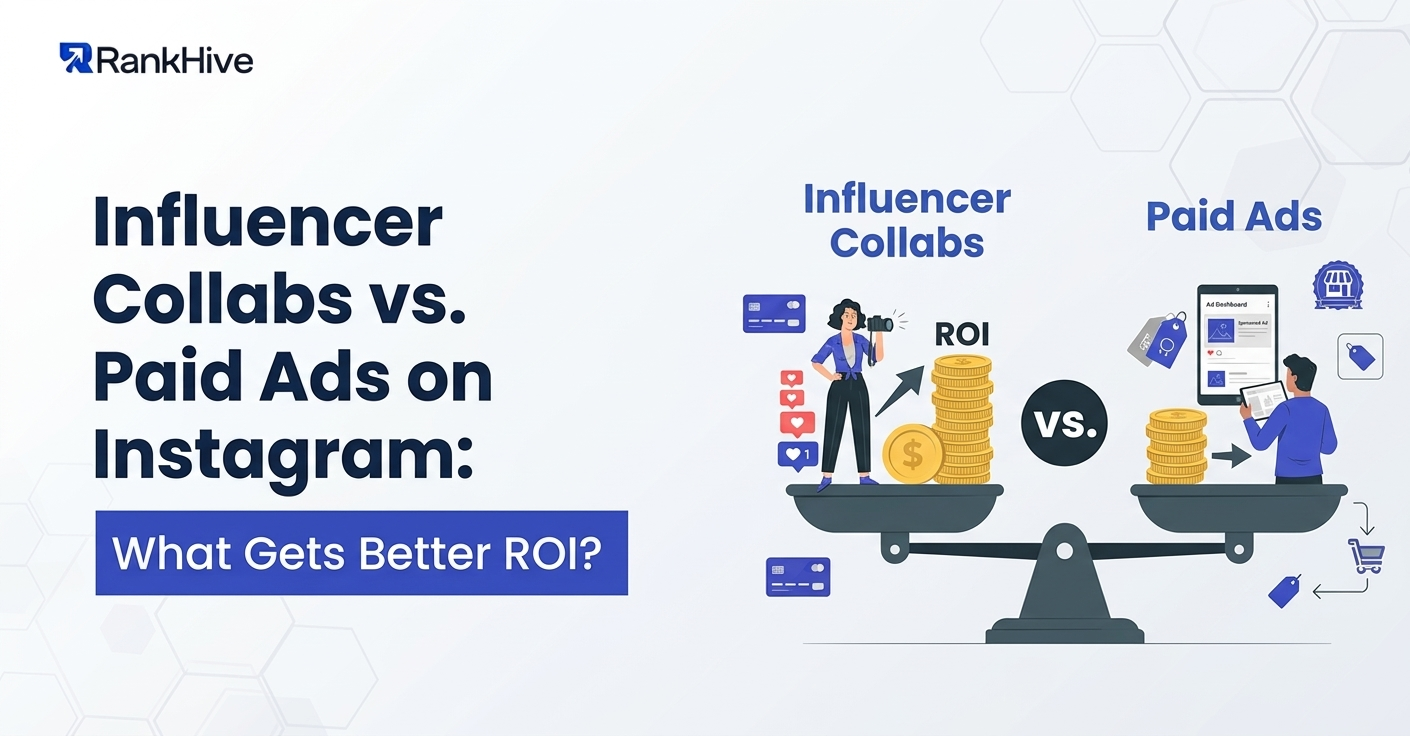
You have a budget for Instagram and two ways to spend it.
Either to choose an influencer to market your product in front of an audience they’ve already built or run Instagram ads aimed at people who look like your ideal customer.
Both can grow the business. They work differently, though. A creator can build trust, get you social proof and content that looks at home in someone’s feed. Ads give you tighter control over targeting, spending, and testing.
But it’s important to understand which one is important to you. It depends on your audience, your offer, and how you measure success. A campaign with thousands of likes can produce almost no sales, while an ad with modest engagement can bring in customers at a profitable cost.
This Instagram marketing guide cover how much paid ads actually cost, reach, engagement, conversions for long term values. It also covers when to use each, how to measure ROI, and when it makes sense to run both.
Influencer collabs vs. Paid Instagram ads: What’s the difference?
Before comparing returns, it helps to know what each one actually buys you.
What is Instagram influencer marketing?
You partner with a creator who already has an audience on Instagram. They promote your product through sponsored Reels, Stories, feed posts, demos, or reviews. Deals range from a single story to a long-term partnership with several deliverables.
Say a skincare brand works with a creator who posts her nightly routine. She doesn’t run a polished ad. She shows where the product fits and tells her followers what she thinks of it.
You get three things out of it:
- Audience access: people who already follow a creator in your niche see your brand.
- Trust: a relevant recommendation makes people more comfortable trying something new.
- Content: you receive creator-made material you may be able to reuse, depending on your usage rights.
What are Instagram paid ads?
Paid ads run through Meta’s advertising platform. You pay to show your content to chosen audiences instead of waiting on organic reach. Formats include Reels ads, Stories ads, feed ads, carousels, and product ads.
You decide who sees the ad, how much you spend, and what you want people to do next: visit your site, fill in a lead form, or buy. You can also test creatives, audiences, and placements against each other.
In short, influencer marketing gets you into an existing community through a creator. Paid ads let you run distribution yourself. Neither guarantees a better return, because results depend on how well the approach fits your audience and goal.
Read more: Instagram Marketing Guide: How Dubai Brands Are Winning the Algorithm in 2026
Influencer marketing vs. Instagram ads: How Much Do They Cost?
The fee or ad budget is only part of the bill. To compare the two fairly, count everything it takes to get results.
Influencer campaigns can include:
- Creator fees for Reels, Stories or posts
- Free products, samples and shipping
- Agency or campaign management fees
- Affiliate commissions on sales
- Extra charges for usage rights or category exclusivity
Pricing shifts with the creator’s audience size, niche, engagement, deliverables, and experience. Someone who films a detailed product demo will usually charge differently from someone posting one story.
Paid ad campaigns can include:
- Media spend through Meta
- Creative production: video, graphics, copy
- Campaign management and optimization
- Landing page work
- Tracking and analytics tools
Start with a small budget campaign. But spending more doesn’t fix weak creativity, a vague offer, or a slow checkout page.
Here’s the distinction that matters. Influencer fees mostly buy access to someone’s audience and content. Ad spend buys distribution. Both usually carry production and management costs on top, so add up the total for each campaign and divide by the number of qualified leads or paying customers it produced.
Which gets better reach: influencers or Instagram ads?
Now comes the big question. Is it influencer marketing or Instagram ads that gets you more reach? Reach is the number of unique accounts that see your content. Both channels can widen it in different ways.
With an influencer, your brand shows up in front of their followers. If those followers match your ideal customer, even a small collaboration lands in front of the right people.
With ads, you choose the audience, test different segments, and retarget people who’ve already interacted with you.
Picture a company selling premium fitness accessories. A fitness creator reaches people who already watch workout videos and hunt for training recommendations. Ads let the company try several segments and see which message gets the most product interest.
Keep in mind that a creator’s follower count doesn’t tell you how many people will actually see a sponsored post. And a paid impression doesn’t mean anyone paid attention.
So look at reach next to audience relevance, engagement, qualified traffic, and conversions. A big audience only helps if it moves you toward your goal.
Engagement: why influencer content can feel more natural
Compare two things: a creator showing how she uses a product in her routine and a brand’s promotional graphic. The creator’s post often feels more relatable. It’s in a familiar format and it comes from someone the viewer chose to follow.
Collaborations tend to prompt:
- Comments asking about the product
- Shares with friends who might want it
- Saves for later
- Story replies and DMs
- Conversations about features and real experiences
Ads can get these too, especially when the creative is useful, funny or relevant. It’s less about the format than about how the message is delivered and how people respond.
One trap to avoid: a Reel with thousands of likes may send hardly anyone to your site, while a plain ad with fewer visible reactions may bring in more purchases. Engagement shows how people respond to content. It doesn’t tell you what the campaign earned.
Conversions and sales: Where Paid ads have an advantage
If you want sales, leads or website enquiries, paid ads have a few practical edges. You can build a campaign around a specific conversion goal, test several creatives, and move budget toward the combinations that hit your targets.
An online clothing store, for example, might test three Reels ads that each lead with a different product benefit. Once there’s enough data, the team compares cost per purchase and conversion rate and shifts spend accordingly.
Influencer campaigns can drive direct sales too, but you have to plan the tracking. Options include:
- Unique discount codes: give each creator their own and count the purchases that use it.
- UTM parameters: tag links so your analytics show where traffic came from.
- Affiliate links: track purchases and commissions per creator.
- Dedicated landing pages: send each partnership to its own page.
- Post-campaign analysis: compare sales and customer activity during and after the collaboration.
None of these captures everything. Someone might find your product through a creator and buy a few days later after seeing an ad. That’s why attribution needs care: the channel that gets credit for a sale isn’t always the only one that influenced it.
How to measure Instagram marketing ROI correctly
Before you decide which channel wins, make sure you’re comparing the same numbers and opting for professional social media marketing services. Here’s how you actually measure Instagram marketing ROI.
ROI vs. ROAS
People mix these up. ROI measures return against your total investment. ROAS measures revenue attributed to ads against ad spend.
ROI = (Revenue − Total cost) ÷ Total cost × 100
ROAS = Attributed revenue ÷ Ad spend
Say an influencer campaign costs $1,000 and brings in $2,500 in attributed revenue. Its ROI is 150%.
Now say an Instagram ad campaign brings in $3,000 from $1,000 of ad spend. Its ROAS is 3x. But if you also paid $500 for creative and management, the total cost is $1,500, and the same ROI formula gives 100%.
These examples leave out product costs, fulfillment, taxes and other operating expenses. Revenue-based ROI isn’t profit margin, so include those costs if you want to judge profitability.
Which metrics should you track?
For influencer work, add creator-specific sales, discount-code redemptions, content performance, and the value of any assets you can reuse. For ads, watch CPA, ROAS, conversion rate, and how each audience and creative performs.
You don’t need every metric. You need the few that show whether the money is earning its keep.
Influencer collaborations vs. paid ads: a side-by-side ROI comparison
The table shows how the channels differ in operation. It doesn’t predict results.
Influencers tend to help when your brand needs a credible introduction to a niche audience. Ads tend to help when you need controlled distribution, conversion testing, and steady optimization. The real answer comes from comparing actual campaign results against the same business goal.
Read more: How Much Does Instagram Marketing Cost in the UAE?
When can influencer collaborations deliver better ROI?
Consider influencers when your audience needs context, a demonstration or some reassurance before buying.
You’re launching a new product
Nobody knows a new product yet. A relevant creator can introduce it to people who already follow content in your category. A home fitness brand, for instance, could work with a trainer who shows how its equipment fits into a realistic workout.
Your product benefits from social proof
Beauty, clothing, food and lifestyle products often sell better when people see them in use. A relevant creator can show how something looks, works or fits into daily life, which gives a shopper more to go on than a product photo.
You want content for future campaigns
A partnership can give you videos, photos, testimonials and demos to use elsewhere, provided you negotiate usage rights. If the content performs well beyond its original post, that improves the economics of the deal.
Whichever situation you’re in, choose creators for audience relevance, content quality and fit with your campaign, not follower count.
When can Instagram paid ads deliver better ROI?
Paid ads suit a business with a clear offer that wants measurable actions.
You need direct-response results
If you want purchases, lead forms, bookings or enquiries, you can build campaigns around exactly those actions. You can also compare creatives and landing pages to see which pairings convert most cheaply.
You want to retarget interested audiences
Most people don’t buy on the first visit. Retargeting lets you reach eligible audiences who engaged with your business, visited your site or took another relevant action. An online store, for example, can show product ads to eligible visitors who viewed items but didn’t check out, subject to tracking rules and platform requirements.
You need to test and scale
Ads let you test messages, formats and audience segments inside a defined structure. Once a combination meets your acquisition targets consistently, you can raise the budget while watching whether costs and conversion rates hold.
Ads aren’t automatically profitable, though. Weak creative, poor targeting, an unclear offer or a slow, confusing landing page can waste a well-managed budget.
Micro-influencers vs. mega-influencers: does bigger mean better ROI?
Not necessarily. Audience size sets the ceiling on reach. It doesn’t tell you how many followers fit your market or how likely they are to buy.
A small business can often test more audience segments with several micro-influencers than with one expensive celebrity deal. That’s not a rule. A larger creator can suit a broad awareness push, and a smaller one can suit a specialised product better.
Before you sign anyone, check their audience demographics, average views, engagement quality and past sponsored posts. Ask yourself whether they can explain your product’s value convincingly.
The hidden ROI: content you can reuse
A creator’s work can keep paying off after the post goes live. A product demo might keep drawing views. A testimonial might answer questions buyers ask all the time.
With the right permissions, you may be able to reuse that content in:
-
Instagram paid campaigns
-
Product and landing pages
-
Email marketing
-
Organic social posts
-
Other promotional materials
Before you agree to a collaboration, get clear on how long you can use the content, which platforms are covered, whether paid ads are allowed, and whether extra licensing fees apply. Paying for a sponsored post doesn’t automatically give you unrestricted rights to it.
Why combining influencer collabs and paid ads can work
You don’t have to pick one. A hybrid approach lets each channel handle a different stage of the customer journey.
-
Influencer collaboration: introduce the product through relevant creator content.
-
Audience interest and social proof: see which content resonates with potential customers.
-
Paid amplification: put approved creator content into paid campaigns to reach chosen audiences.
-
Measure conversions and profitability: track attributed revenue, acquisition costs and overall returns.
A skincare brand could partner with three creators to demo a new moisturiser, pick the strongest approved video, and run it as an ad against other creatives. That gives you creator storytelling, paid distribution and performance data in one test. It doesn’t guarantee a higher ROI. It does show you whether creator content also works as advertising.
Planning to run a paid ad campgain? Get in touch with our expert team to get started!
FAQs
1. Is influencer marketing more profitable than Instagram ads?
Not always. Influencers can build trust and awareness, while ads give you more control over distribution and testing. Profitability depends on campaign costs, audience fit, conversion rates, margins and attribution.
2. What has a better ROI: influencers or paid social ads?
Neither is guaranteed to. Compare total costs, attributed revenue, customer acquisition costs and profit over the same period. Your own campaign data will tell you more than a general industry benchmark.
3. How much should a small business spend on Instagram influencers?
Start with an amount you can afford to test without starving other essential marketing. Creator fees vary by audience, niche, deliverables and usage rights. Set a clear objective, review the results, then decide whether to spend more.
4. Are micro-influencers better for ROI?
They can be, especially for niche audiences or tight budgets. But results still depend on audience quality, content, pricing and the product. A smaller audience doesn’t automatically mean more sales.
Final Takeaway
Influencer collaborations and Instagram ads solve different problems. Creators help you build awareness, earn credibility and produce relatable content. Ads give you more direct control over targeting, testing and distribution. Some businesses should start with creators, others with ads, and where budget allows, running both can pair audience trust with measurable performance.
At Rankhive we skip the guessing game and pick one clear objective to measure real conversions, and put your next dirham where the data points.


