


Facebook has been declared “dead” when it comes to social media marketing! But is it true?
We are in 2026, and it continues to generate leads, drive ecommerce sales, and help businesses build loyal communities on Facebook.
The reality is that Facebook hasn’t disappeared; it has evolved over the years.
Today’s Facebook isn’t just a place where you share life updates. It’s a powerful ecosystem that combines organic content, AI-powered advertising, online communities, messaging, live shopping, and advanced audience targeting.
Whether you have a local cafe, an ecommerce store, a SaaS startup, or a global enterprise, Facebook still offers one of the most effective ways to connect with customers at every stage of the buying journey.
The numbers back this up.
Facebook continues to attract more than 3 billion monthly active users, making it the world’s largest social networking platform. However, succeeding on Facebook today requires more than simply posting a few photos or boosting the occasional post.
This is the only Facebook marketing guide that businesses need to combine valuable content, meaningful engagement, data-driven advertising, and AI-powered optimization.
Key Takeaways
- Understand why Facebook remains one of the most valuable marketing platforms in 2026.
- Set measurable Facebook marketing goals that align with your business objectives.
- Build a complete marketing funnel that turns followers into paying customers.
- Optimize your Facebook Business Page for visibility and trust.
- Create content that encourages engagement instead of simply chasing likes.
- Use Facebook Ads, Meta AI, and audience targeting to reach the right people.
- Build an active community through groups, Messenger, and customer conversations.
- Measure campaign performance using the metrics that actually matter.
- Avoid common mistakes that limit reach, waste ad spend, and slow business growth.
Is Facebook Marketing Still Worth It in 2026? Myth vs. Reality
Here’s the reality check!
If you’ve heard that Facebook is no longer relevant, you’re not alone. Every year the popularity of Facebook is increasing. Here are some stats to verify it.
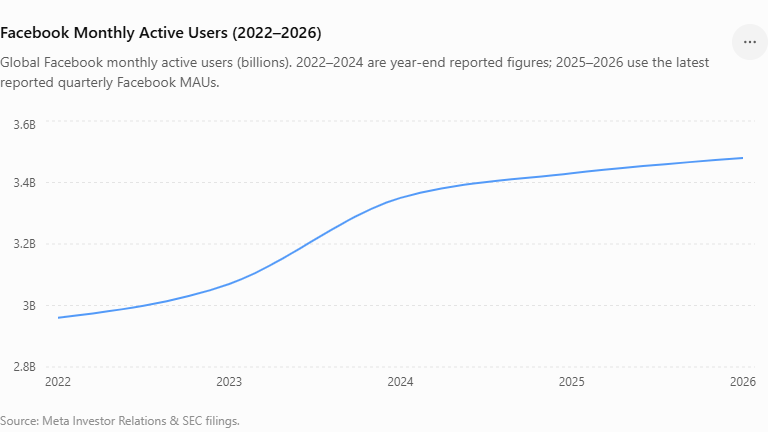
The number of active Facebook users provides an opportunity to invest heavily in it, and for good reason.
| Myth | Reality |
| Facebook is only for older users | Millennials and Gen X remain highly active on Facebook. This platform influences buyers like younger audiences who still use and explore Groups, Events, and Marketplace. |
| Organic reach is dead | Organic reach has become more competitive, but high-quality, engaging content still performs well. |
| Facebook Ads are too expensive | With proper targeting of keywords, Facebook Ads remain one of the most cost-effective digital advertising channels. |
| Businesses don’t need Facebook anymore | Many consumers still expect businesses to have an active Facebook presence for updates, reviews, and customer support. |
How to Create Facebook Marketing Strategy Step-by-Step
Step #1: Start with a Clear Marketing Goal
One of the biggest reasons Facebook marketing campaigns fail isn’t the algorithm; it’s the lack of a clear objective.
Many businesses start posting content without defining what success actually looks like. They celebrate likes and followers but struggle when it comes to real time conversions.
Before creating your first post or launching an ad campaign, ask yourself a simple question:
What do you want Facebook to achieve for your business?
Your answer will shape everything. From the type of content you create to the audiences you target and the metrics that you can use to measure success.
The key is to choose goals that are specific, measurable, and tied to business growth.
Match Goals with the Right KPIs
| Marketing Goal | KPI to Track |
| Brand Awareness | Reach, Impressions |
| Website Traffic | Link Clicks, CTR |
| Lead Generation | Cost per Lead, Form Completions |
| Sales | ROAS, Conversion Rate |
| Community Growth | Engagement Rate, Group Membership |
| Customer Support | Response Time, Customer Satisfaction |
Using the SMART framework can also help keep your goals focused:
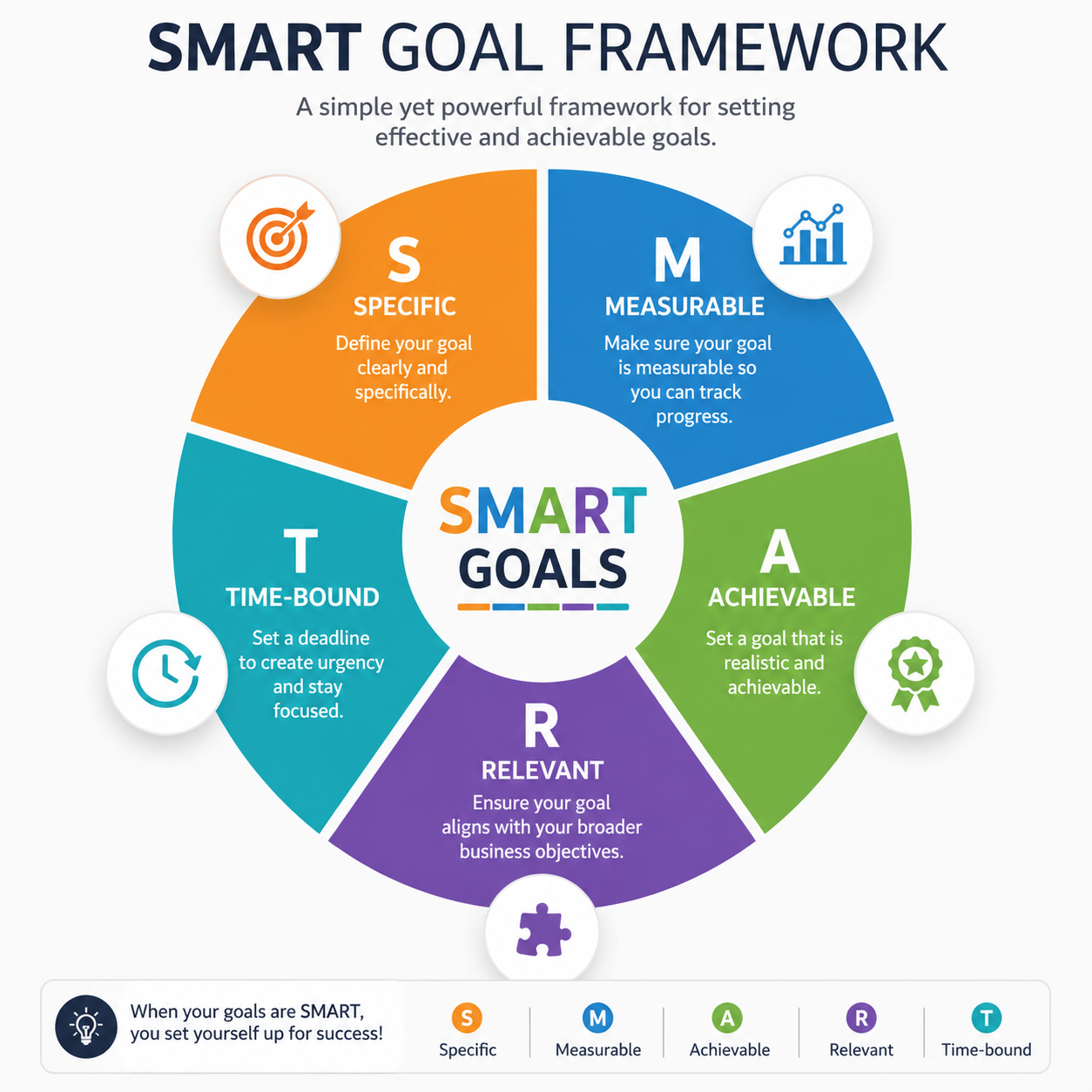
- Specific: Increase qualified website traffic from Facebook.
- Measurable: Grow Facebook-driven traffic by 20%.
- Achievable: Based on previous campaign performance.
- Relevant: Supports broader marketing and sales objectives.
- Time-bound: Achieve the target within the next three months.
Instead of saying, “We want more followers,” aim for a goal like:
“Generate 150 qualified leads from Facebook Ads within the next 90 days while maintaining a cost per lead below $15.”
That gives your team a clear direction and makes it much easier to measure success.
Step 2: Optimize Your Facebook Business Page
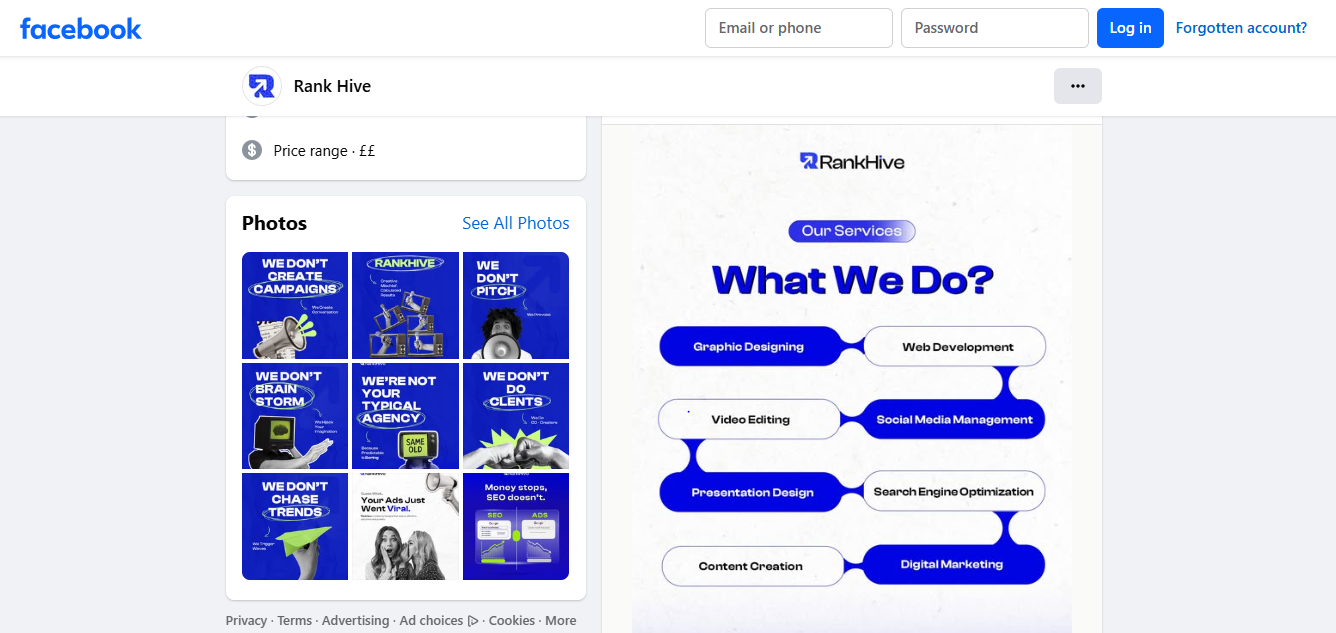
Your Facebook Business Page is often the first impression potential customers have of your brand. An outdated profile with missing information or inconsistent branding can reduce trust before someone even visits your website. Rankhive Business page gives a clear picture of how a strong business profile looks. Our social media team understands the latest trends that give an instant boost to business profiles.
Revamp your Facebook business profile for real time customers! Get in touch with our expert team today.
A business page is a digital storefront. Every element should reassure visitors that your business is active, professional, and easy to reach out to.
-
Use Consistent Branding
Choose a recognizable profile picture or a brand logo. Pair it with a high-quality cover image that reflects your products, services, or brand personality.
Consistency across your website, Facebook, Instagram, and other platforms that makes your business easy to recognize.
-
Write a Keyword-Optimized About Section
Your About section isn’t just for a company’s introduction; it’s also an opportunity that improves discoverability within Facebook Search.
Include:
- What your business does
- Who you help
- Your location
- Primary services or products
- Contact information
- Relevant keywords naturally
For example:
“We help small businesses grow through data-driven Facebook marketing, paid advertising, and social media management.”
Simple, clear, and keyword-rich.
-
Add a Strong Call-to-Action
Facebook allows businesses to add CTA buttons such as
- Book Now
- Contact Us
- Shop Now
- Learn More
- Send Message
- Sign Up
Choose the button that matches your primary business goal instead of selecting the random ones. A strong CTA makes a business profile more compelling.
-
Complete Every Business Detail
Don’t leave any section blank on your company’s business profile.
Here’s what you should include in a business profile:
- Phone number
- Email address
- Website
- Business hours
- Physical address
- FAQs
- Service areas
The more your profile is complete and optimize, the more trustworthy it appears to your customers.
-
Encourage Customer Reviews
Reviews influence buying decisions long before customers contact your business.
After completing a project or making a sale, politely encourage satisfied customers to leave honest feedback. Positive reviews build credibility while giving future customers confidence in your business.
Facebook Business Page Optimization Checklist
- Professional profile photo
- Branded cover image
- Optimized About section
- Updated contact details
- Business hours
- CTA button
- Website link
- Customer reviews enabled
- Messenger activated
- Meta Business Suite connected
Step 2: Analyze Your Competitors
One of the easiest ways to improve your Facebook marketing strategy is to study businesses that are already succeeding.
Competitor analysis isn’t about copying ideas; it’s about understanding what resonates with your shared audience and identifying opportunities to stand out.
When reviewing competitor pages, pay attention to the following:
Posting Frequency
How often do they post?
- Daily?
- Three times a week?
- Weekly?
Consistency often matters more than volume. And post frequency is what makes a brand more credible and engaging.
Top-Performing Content
Look for posts with high engagement and capitalize on it. To identify a top performing content, you need to ask yourself:
- Are they videos?
- Carousels?
- Reels?
- Customer stories?
- Educational posts?
Patterns usually emerge quickly. And a top performing content is what boosts engagement.
Engagement Quality
Likes alone doesn’t work. The real engagement begins when clients engage with brands.
- Are customers asking questions?
- Sharing experiences?
- Tagging friends?
Meaningful conversations often indicate strong community engagement. This quality engagement helps turn visitors into high paying customers.
Promotions and Offers
Notice:
- Seasonal campaigns
- Limited-time discounts
- Giveaways
- Product launches
- Event promotions
This can inspire your own campaign planning.
Customer Feedback
Reviews reveal valuable insights about competitors.
Pay attention to recurring praise and common complaints. Both can help shape your own marketing and customer service strategy.
Remember, your goal isn’t to become another version of your competitor. It’s to understand the market well enough to create something even more valuable.
Step 3: Know Your Audience
Great Facebook marketing starts with understanding your audience.
The better you know your audience, the easier it becomes to create content that captures attention, starts conversations, and drive the desired action.
Instead of thinking in terms of “everyone,” build customer personas that represent your ideal buyers.
For each persona, define:
- Age
- Location
- Occupation
- Interests
- Challenges
- Goals
- Buying motivations
- Preferred content types
For example:
| Persona | Small Business Owner Sarah |
| Age | 38 |
| Goal | Generate more local leads |
| Biggest Challenge | Limited marketing budget |
| Preferred Content | Short videos, case studies, practical tips |
| Buying Trigger | Proven ROI and real customer success stories |
Facebook’s Audience Insights and Meta Ads Manager can also provide valuable information about:
- Interests
- Device usage
- Demographics
- Purchase behaviors
- Online activity
- Existing customer audiences
You can further improve campaign performance by creating:
- Custom Audiences: People who have visited your website, engaged with your content, or joined your email list.
- Lookalike Audiences: New users who share characteristics with your best customers.
Rather than targeting the broadest audience possible, focus on reaching the people most likely to engage and convert.
Step 4: Create a Facebook Content Strategy That Works
One of the biggest misconceptions about Facebook marketing is that success comes from posting more often.
It doesn’t.
Success comes from posting content that people genuinely want to interact with.
Facebook’s algorithm is designed to prioritize meaningful interactions. It rewards posts that encourage conversations, generate watch time, and provide value, not posts that simply ask people to “Like and Share.”
Focus on Four Core Content Pillars
Instead of posting randomly, organize your content around a few consistent themes.
1. Educational Content
Teach your audience something useful.
Examples include:
- How-to guides
- Industry tips
- Common mistakes
- FAQs
- Checklists
- Tutorials
Educational posts position your business as a trusted resource rather than just another seller.
2. Inspirational Content
People enjoy stories that motivate and connect emotionally.
Share:
- Customer success stories
- Team achievements
- Business milestones
- Behind-the-scenes moments
- Founder stories
These posts humanize your brand.
3. Community Content
Facebook rewards interaction.
Encourage conversations by posting:
- Polls
- Questions
- User-generated content
- Customer photos
- Opinion posts
Instead of asking for likes, ask thoughtful questions your audience wants to answer.
4. Promotional Content
Promotional posts are still important, but they shouldn’t dominate your feed.
Use them to highlight:
- New products
- Special offers
- Events
- Limited-time discounts
- Product launches
A healthy content mix keeps your audience engaged without feeling like they’re constantly being sold to.
Best Types of Facebook Content in 2026
Content consumption habits continue to evolve, but one thing remains consistent: people engage with content that’s easy to consume, informative, and authentic.
Here are the formats delivering the strongest results for businesses today.
Short-Form Videos & Reels
Reels continue to receive strong organic distribution and are excellent for reaching new audiences.
Ideas include:
- Quick tutorials
- Product demonstrations
- Customer testimonials
- Day-in-the-life videos
- Before-and-after transformations
Aim to capture attention within the first three seconds.
Carousel Posts
Carousels work well for breaking complex topics into digestible slides.
Use them for:
- Step-by-step guides
- Product showcases
- Tips and checklists
- Case studies
Stories
Stories are ideal for keeping your brand top of mind without overwhelming your main feed.
Share:
- Flash promotions
- Polls
- Countdown stickers
- Behind-the-scenes content
- Daily updates
Live Videos
Going live creates real-time interaction and helps build trust.
Popular formats include:
- Q&A sessions
- Product launches
- Tutorials
- Interviews
- Webinars
User-Generated Content
Nothing builds trust like content created by your customers.
Encourage people to share photos, reviews, or videos featuring your products or services, then highlight their content.
Content Performance Comparison
| Content Type | Best For |
| Reels | Reach and discovery |
| Carousels | Education |
| Stories | Daily engagement |
| Live Videos | Trust and interaction |
| Testimonials | Social proof |
| User-Generated Content | Credibility |
| Polls | Community engagement |
The strongest Facebook pages don’t rely on a single content format. They combine educational posts, videos, conversations, and promotions to keep audiences engaged over time.
Boost your brand content performance! Start creating your social media content strategy today.
Ending Note
Facebook remains one of the most powerful platforms for businesses in 2026.
But having a successful Facebook business page requires more than just posting more. You need to have a clear strategy, creating valuable content, engaging with your audience, and using data to improve your results.
Whether your goal is to build brand awareness, generate leads, or increase sales, combining organic content with targeted Facebook Ads can help you reach the right audience and drive measurable growth.
Now is the perfect time to review your current Facebook strategy.
Let our team identify areas for improvement and put best practices into action for solid marketing.


